Making Bathroom Miniatures: A Guide to Tiny Realism with Pınar Ebru Halbuni
The allure of the miniature world lies in its ability to compress reality into a manageable, tangible form. For many hobbyists, the bathroom—a space often overlooked in grand architectural models—presents a unique challenge and an equally rewarding opportunity for detailed craftsmanship. Making bathroom miniatures is not merely about shrinking objects; it is an exercise in precision, material science, and artistic patience. At the forefront of this niche craft is self-learned sculptor and miniature artist Pınar Ebru Halbuni, widely known by her creative alias, MahmurLemur. Through her tutorials and shared expertise, she demystifies the process of creating hyper-realistic tiny fixtures, inviting enthusiasts to join the fascinating world of miniature artistry.
The Artistic Philosophy Behind Tiny Spaces
Why focus on the bathroom? In the realm of dollhouses and dioramas, the bathroom is frequently the most complex room to execute convincingly. It requires a blend of hard surfaces, reflective materials like chrome or glass, and soft textiles such as towels and rugs. Pınar Ebru Halbuni approaches making bathroom miniatures with a philosophy that values resourcefulness alongside technical skill. Her work demonstrates that you do not need industrial machinery to achieve professional results; instead, you need a keen eye for detail and a willingness to experiment with everyday materials.
The value of this craft extends beyond the final product. It serves as a meditative practice, allowing creators to disconnect from the digital noise of modern life and engage in slow, deliberate creation. For professionals in interior design or architecture, mastering these techniques can enhance presentation skills, offering clients a tactile sense of scale and texture that digital renderings often lack.
Essential Materials and Tools
Before diving into specific projects, it is crucial to understand the toolkit required for making bathroom miniatures. While specialized tools exist, much of the magic happens with items found around the house. Key materials include:
- Polymer Clay: The backbone of most miniature sculptures, available in various colors and hardness levels.
- Recycled Cardboard: Specifically toilet paper rolls, which serve as the core structure for holders and dispensers.
- Acrylic Paints: High-pigment paints are essential for achieving realistic finishes on plastic and clay.
- Clear Resin or UV Resin: Used to simulate water, soap liquids, and glossy ceramic glazes.
- Precision Tools: X-Acto knives, needle tools, and fine-grit sandpaper for detailing.
Pınar emphasizes that the quality of your tools matters less than the steadiness of your hand. A simple sewing needle can create intricate patterns on clay, while a toothpick can apply glue with surgical precision.
Step-by-Step: Crafting the Essentials
To truly appreciate the intricacy of making bathroom miniatures, one must look at the individual components that make up the room. Pınar’s tutorials break down these elements into manageable steps, ensuring that even beginners can achieve satisfying results.
The Toilet Paper Roll and Holder
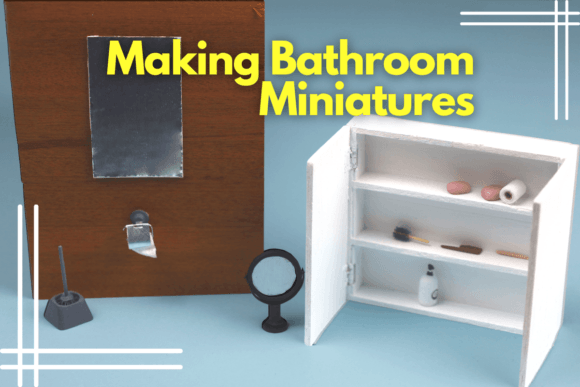
It may seem trivial, but a poorly made toilet paper roll can break the illusion of an entire scene. The process begins with the holder. Using thin wire or stiff plastic rods, the frame is constructed to mimic metal or wood. The challenge lies in the scale; the proportions must be exact. For the paper itself, Pınar suggests using thin tissue paper or specially treated printer paper. The key technique involves rolling the paper tightly around a micro-dowel, then gently teasing the edges to create a natural, used look. This attention to imperfection is what separates amateur attempts from professional-grade miniatures.
Soap and Dispensers
Liquid soap dispensers offer a chance to play with transparency and fluid dynamics. To create the bottle, clear polymer clay or small plastic vials are shaped and smoothed. The "soap" inside is where creativity shines. By mixing translucent resin with a drop of colored paint, artists can simulate everything from thick moisturizing lotion to clear antibacterial gel. When making bathroom miniatures, the meniscus—the curve of the liquid at the top—must be carefully crafted to look stationary yet fluid. Solid soap bars, conversely, require texturing. Using a coarse sponge or a bristle brush on soft clay can replicate the porous surface of handmade artisanal soap.
Brushes and Accessories
Toothbrushes and hairbrushes are notoriously difficult due to their fine bristles. Pınar recommends using stretched sprue (plastic strands pulled from model kit frames) or fine monofilament fishing line. These materials are cut to uniform lengths and glued into drilled holes in a clay handle. The alignment must be perfect; even a millimeter of deviation is visible at 1:12 scale. This step tests the creator’s patience but yields high rewards in realism.
Real-World Applications and Benefits
Who benefits from learning how to craft these tiny items? The audience is broader than one might expect. Dollhouse collectors are the obvious demographic, seeking to customize their collections with unique, handcrafted pieces rather than mass-produced plastic. However, making bathroom miniatures also appeals to:
- Educators: Teachers use miniatures to teach scale, geometry, and fine motor skills to students.
- Therapists: Occupational therapists utilize miniature crafting to help patients regain dexterity and focus.
- Content Creators: Stop-motion animators and photographers use these props to create engaging visual narratives.
- Interior Design Students: Practicing with miniatures helps in understanding spatial relationships and material textures without the cost of full-scale prototypes.
For business owners in the craft supply industry, understanding the nuances of this hobby can help in curating better product lines. Knowing that enthusiasts struggle with finding the right shade of "chrome" paint or the correct diameter for towel rods allows retailers to stock more relevant items.
Strengths and Limitations of the Craft
Like any artistic endeavor, making bathroom miniatures has its strengths and considerations. The primary strength is the low barrier to entry regarding cost. Most materials are inexpensive or recyclable. Furthermore, the community aspect, championed by artists like MahmurLemur, provides a supportive network for sharing tips and troubleshooting.
However, there are limitations. The time investment is significant. A single dispenser might take hours to sculpt, cure, paint, and seal. Additionally, the fragility of the final products means they are often display-only items, not suitable for heavy handling. Dust accumulation is another practical concern; miniature bathrooms require regular, gentle cleaning with soft brushes to maintain their pristine appearance.
Evaluating Suitability for Your Project
Before committing to a full bathroom suite, consider your end goal. If you are creating a playset for children, durability should take precedence over hyper-realism. In this case, using harder plastics and avoiding delicate protrusions is wise. If the goal is a static display or a photography prop, you can push the boundaries of fragility for the sake of aesthetic perfection. Pınar’s approach encourages creators to assess their skill level honestly. Start with simple items like soap bars before attempting complex mechanisms like faucet handles.
Joining the Community
The journey of making bathroom miniatures is enriched by connection. Following artists like Pınar Ebru Halbuni offers more than just instructions; it provides inspiration and a sense of belonging. Social media platforms have become galleries for these tiny masterpieces, allowing artists to receive feedback and evolve their techniques. By engaging with this community, beginners can avoid common pitfalls, such as using the wrong adhesive for certain plastics or misunderstanding light refraction in resin work.
Ultimately, the fascination with miniatures stems from our desire to control and perfect our environment. In a world that is often chaotic and large, creating a tiny, orderly bathroom where every towel is folded and every bottle is perfectly placed offers a profound sense of satisfaction. Whether you are a professional sculptor or a curious novice, the tools are within reach. All that is required is the willingness to start small.
As you embark on this creative path, remember that mistakes are part of the process. A crooked tile or a cloudy resin pour is not a failure but a lesson. With each attempt, your hands become steadier, and your eye becomes sharper. The world of making bathroom miniatures awaits, offering a delightful escape into a realm where details matter most.