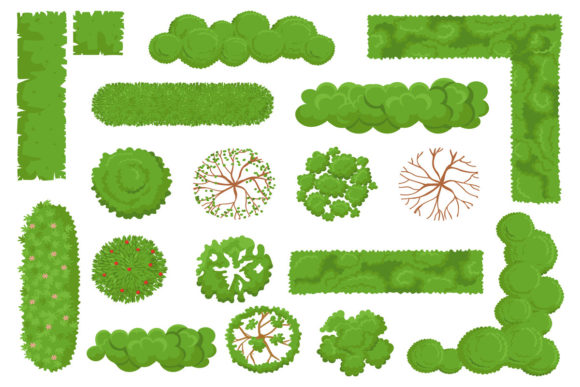
Top View Trees and Bushes: Elevating Design with Aerial Perspectives
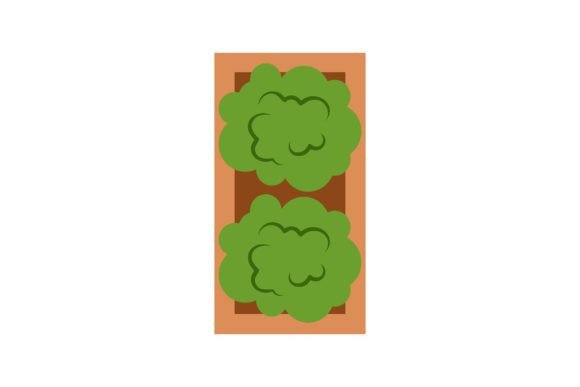
In the evolving landscape of digital design, architectural visualization, and urban planning, the perspective from which we view nature matters just as much as the subject itself. Top View Trees and Bushes have become an indispensable asset for creators who need to convey spatial relationships, density, and environmental context without the visual clutter of three-dimensional rendering. Whether you are designing a sprawling park layout, mapping out a residential garden, or creating infographics about ecological conservation, the ability to integrate high-quality, isolated vector icons of forest trees and green park bushes is crucial.
This shift toward aerial and plan-view aesthetics is not merely a stylistic choice; it reflects a broader trend in how professionals communicate complex spatial data. As workflows become more collaborative and digital-first, the demand for clean, editable, and scalable assets has surged. The modern designer, architect, or marketer requires resources that are not only visually appealing but also technically flexible. This is where a comprehensive set of top-down plant elements becomes a powerful tool in your creative arsenal.
The Strategic Value of Plan-View Assets in Modern Workflows
Traditionally, incorporating natural elements into technical drawings or marketing materials required time-consuming manual illustration or reliance on low-resolution raster images that pixelated when scaled. Today, the expectation is for precision and adaptability. A professional-grade collection of top view trees and bushes addresses these needs by providing vector-based solutions that maintain clarity at any size.
For architects and landscape designers, these assets are essential for site plans. When presenting a proposal to a client, the ability to quickly populate a blank canvas with realistic yet stylized vegetation helps stakeholders visualize the final outcome. It bridges the gap between abstract blueprints and the lived experience of a space. Similarly, urban planners use these elements to assess green coverage, shading patterns, and pedestrian flow. By using isolated vector icons, they can manipulate individual elements—moving a tree to avoid a utility line or adjusting the density of shrubbery to enhance privacy—without redrawing the entire scene.
From a business perspective, efficiency drives adoption. Time saved on asset creation is time redirected toward strategic design decisions. A pre-made set of garden landscape elements allows freelancers and agencies to meet tight deadlines without compromising on quality. It ensures consistency across projects, reinforcing a professional brand image that values detail and accuracy.
Understanding the Technical Advantage: Vector vs. Raster
The core value of a high-quality asset pack lies in its file format. When evaluating resources for Top View Trees and Bushes, the distinction between vector and raster graphics is paramount. Raster images, such as standard JPEGs or PNGs, are composed of pixels. While useful for web previews, they lack the flexibility needed for professional print or large-scale displays. Enlarging a raster image often results in jagged edges and loss of detail.
In contrast, vector files, such as the EPS10 format included in premium sets, use mathematical paths to define shapes. This means you can scale a tiny bush icon to the size of a billboard without any loss in resolution. For creators, this scalability is non-negotiable. It allows for seamless integration into various media, from small mobile app interfaces to large-format architectural posters.
Furthermore, vector files offer unparalleled editability. Using software like Adobe Illustrator, users can separate elements, change colors to match specific brand palettes, or modify shapes to suit unique project requirements. If a project calls for a specific shade of autumnal orange rather than summer green, the vector format makes this adjustment instantaneous. This level of control empowers designers to move beyond generic stock imagery and create bespoke visuals that truly resonate with their audience.
Applications Across Industries and Creative Practices
The utility of top-down nature elements extends far beyond traditional landscaping. As digital content consumption grows, so does the diversity of applications for these assets. Here is how different professionals are leveraging these tools:
- Urban Planning and Real Estate: Developers use these icons to create compelling site maps for brochures and websites. Highlighting green spaces enhances the perceived value of properties, appealing to environmentally conscious buyers.
- Game Development and Map Design: Indie game developers and tabletop RPG creators utilize top-view trees to build immersive environments. The isolated nature of the icons allows for easy layering and customization within game engines or map-making software.
- Infographics and Data Visualization: Environmental organizations and educators use these elements to illustrate concepts like deforestation, carbon sequestration, or urban heat islands. Clear, recognizable icons help simplify complex data for general audiences.
- Digital Marketing and Social Media: Bloggers and marketers incorporate these graphics into posts about sustainability, gardening tips, or outdoor events. The clean aesthetic fits well with modern minimalist design trends prevalent on platforms like Instagram and Pinterest.
Each of these use cases highlights a common theme: the need for clarity and versatility. By providing a diverse range of species—from dense forest trees to manicured park bushes—comprehensive sets enable creators to tailor their visuals to specific contexts, ensuring relevance and engagement.
Navigating the Evolution of Digital Nature Representation
The representation of nature in digital media has evolved from simplistic symbols to nuanced, detailed illustrations. Early computer-aided design tools offered limited libraries with repetitive, unrealistic shapes. Today, there is a strong emphasis on botanical accuracy and stylistic variety. Users expect assets that reflect real-world diversity, including variations in leaf density, canopy shape, and species characteristics.
This evolution mirrors a broader societal shift toward environmental awareness. As people become more connected to issues of climate change and biodiversity, the way we depict nature in media carries greater weight. Authentic, well-designed representations of trees and bushes contribute to a more respectful and accurate portrayal of the natural world. For designers, this means choosing assets that avoid caricature and instead offer a balanced blend of stylization and realism.
Moreover, the rise of remote collaboration has influenced asset standards. Teams working across different time zones and software platforms need files that are universally compatible. The EPS10 standard remains a robust choice because it is supported by most major vector editing programs, ensuring that files can be shared and edited without compatibility issues. This interoperability is critical for maintaining workflow continuity in distributed teams.
Practical Tips for Integrating Top-Down Elements
To maximize the impact of Top View Trees and Bushes in your projects, consider the following best practices:
- Maintain Consistent Scale: Ensure that all plant elements are scaled relative to each other and to other objects in your design. A mismatched scale can disrupt the realism and readability of your composition.
- Use Layering Strategically: In vector editors, organize your elements into layers. Group trees, bushes, and ground cover separately. This organization simplifies editing and allows for quick adjustments to lighting or shadow effects.
- Consider Color Harmony: While green is the dominant color, introduce subtle variations to add depth. Use darker shades for shadows under canopies and lighter tones for sunlit areas. This technique adds dimensionality to flat, top-down views.
- Optimize for Performance: When using these assets in web or app design, ensure that vector files are optimized to prevent slow loading times. Simplify paths where possible without sacrificing visual quality.
By adhering to these principles, you can create visuals that are not only aesthetically pleasing but also functional and user-friendly. The goal is to enhance communication, not complicate it.
Future-Proofing Your Creative Toolkit
As technology continues to advance, the line between static and interactive design blurs. Augmented reality (AR) and virtual reality (VR) applications increasingly rely on lightweight, scalable assets. While current top-view icons are primarily used for 2D designs, their vector foundation makes them suitable for conversion into 3D models or interactive map markers. Investing in high-quality vector sets today prepares your toolkit for tomorrow’s multimedia demands.
Additionally, the trend toward sustainable design practices encourages the reuse and repurposing of digital assets. Rather than creating new illustrations for every project, building a library of versatile, editable elements promotes efficiency and reduces digital waste. This approach aligns with the values of many modern businesses and creators who prioritize sustainability in both their message and their methods.
In conclusion, Top View Trees and Bushes are more than just decorative elements; they are functional tools that enhance clarity, efficiency, and aesthetic appeal in a wide range of professional contexts. By understanding their technical advantages and applying them thoughtfully, creators can produce work that is both visually striking and practically effective. Whether you are mapping a forest, designing a garden, or illustrating an environmental report, these assets provide the foundation for clear, compelling visual storytelling.